RecovR: Vehicle Theft Recovery
- 3.6
- Rating
- 50.00K
- Installs
- Free
- Price

 Analysis by App-foxy
When a car is stolen, the first problem is not simply knowing that it has disappeared. The useful question is where it is now, and whether that information can help with recovery. That is the narrow but important job I found at the center of RecovR: Vehicle Theft Recovery: it is a companion app for people who already have a RecovR locator installed in their vehicle. I would not describe it as a general driving assistant or a replacement for every kind of roadside service. Its value depends on that locator, but when the hardware is part of the setup, the app gives the recovery process a much clearer digital starting point.
RecovR is a free app in the Auto & Vehicles category, developed by RecovR. It is suitable for Everyone, supports devices running Android 9 or later, and its current version is 1.72.3. The app has passed the early-experiment stage: it has more than ten thousand installs, with a 3.5 average from over a hundred ratings and dozens of written reviews. Those figures suggest a useful but not universally smooth experience, which matches my impression. The concept is straightforward, while the real-world usefulness depends on installation, connectivity, and how calmly you act when something goes wrong.
One capability that changes the recovery conversation
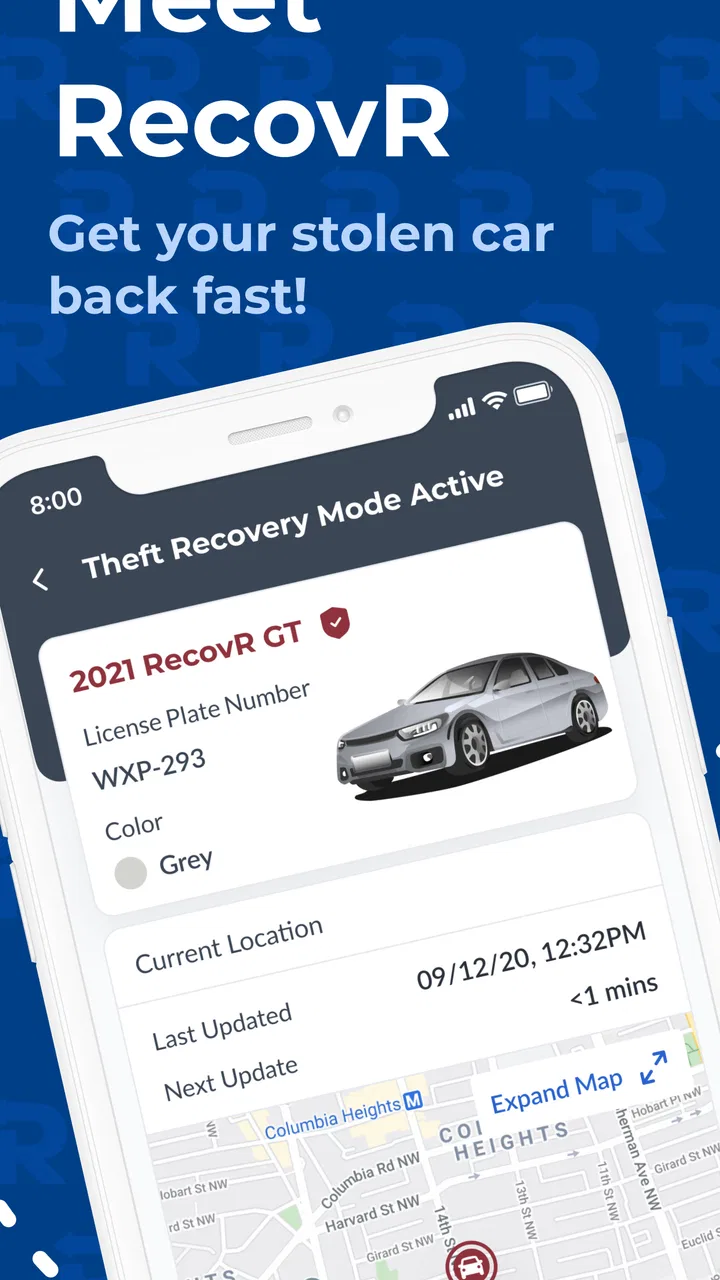
The capability worth focusing on is vehicle locating through a connected RecovR locator. In normal life, a locator can turn a vague situation into a location-led response. Instead of beginning with “I have no idea where the car is,” you can begin by checking the app and gathering information that may help you decide what to do next.
You May Also Like

 Google Keep - Notes and lists
Google Keep’s Quiet Growth Shows the Appeal of Simpler Notes
As mobile work gets busier, Google Keep keeps winning a simple contest: capture a thought quickly, find it later, and get on with the day.

 Blood Strike: 2.5 Anniversary
Blood Strike’s Loadouts Turn Every Drop Into a Tactical Gamble
A close look at Blood Strike’s custom loadouts: how fast access to signature weapons reshapes its battle royale rhythm, rewards preparation, and narrows the gap between fights.

 Pandora - Music & Podcasts
Pandora’s Music Is Easy to Start, but Harder to Recover
Pandora’s strength is its low-effort path from a seed to a station. Its weak spot is how much confidence it asks you to place in connection, setup, and quiet recovery.

 8 Ball Pool
 Is Built on Rivalries, Rematches, and Routine
A close look at the rivalries, rematches, shared routines, and unanswered safety questions that turn a quick pool match into a persistent mobile community.

 Samsung Music
’s Quiet Strength Is Playing What You Already Own
Its reach comes less from spectacle than from dependable access to a personal library. That simplicity is both the app’s strongest retention engine and its ceiling.

 AccuWeather: Weather Radar
AccuWeather Review: A Quick, Clear Forecast for Everyday Decisions
For everyday plans, the best forecast is the one you can understand quickly. AccuWeather makes rain timing, radar, and local conditions easy to act on, with a few trade-offs.
More From Our News Desk



That distinction matters. A vehicle recovery app is not valuable because opening it is interesting; it is valuable because it can reduce uncertainty at a stressful moment. If the car has been taken, the app’s role is to help you locate the vehicle associated with the installed device. I see that as a focused tool rather than a broad dashboard of driving features, and that focus is one of its strengths.
There is also a practical difference between a locator and a memory aid. A phone’s map history might show where I went, but it does not necessarily help when the vehicle itself is no longer where I left it. A connected locator is designed around the car, so the relevant object remains the vehicle rather than the handset I happen to be carrying.
The key benefit is not convenience; it is a better first decision when the vehicle is missing. I can check the vehicle’s reported position, use that information when contacting the appropriate authorities, and avoid wasting time searching places based only on guesswork. The app does not remove the need for sensible action, but it can make the first few minutes more informed.
What the app is—and what it is not
I would set expectations carefully before installing it. RecovR is not useful as a stand-alone theft detector if there is no RecovR locator connected to the car. The store summary itself frames the app around vehicles equipped with that locator, and that hardware relationship is central to the entire experience. Downloading the app alone does not turn an ordinary vehicle into a trackable one.
That makes the app different from a simple map utility. A map app can help me find a parked car only when I have recorded or remembered where I left it. RecovR is intended to work from the vehicle’s dedicated locator instead. The trade-off is obvious: the dedicated approach can be more relevant during a theft, but it requires the correct device and a properly established connection before an emergency occurs.
I also would not treat the displayed location as permission to confront anyone or recover the car personally. A location is useful information, not a safety instruction. If a vehicle appears somewhere unfamiliar, the responsible next step is to involve the authorities and provide the available details. The app can support a recovery workflow; it should not encourage a solo pursuit.
How I would prepare it before there is a problem
The best time to judge this app is not after a vehicle disappears. I would set it up while the car is safely parked, confirm that the intended vehicle is the one represented in the app, and learn where the locating information appears. That preparation is more important here than memorizing a long list of screens.
I would also make sure the phone I expect to use is signed in and available, rather than relying on a rarely used spare device. In a stressful situation, forgotten credentials, an old phone, or an unfamiliar interface can become more frustrating than the actual location check. A short practice session while the vehicle is in a known place can reveal whether the app is ready for the way I plan to use it.
Another useful habit is keeping basic vehicle information separately accessible. The app may help with location, but a recovery conversation can still require identifying details about the car and the circumstances. I would keep those details in a secure place and avoid assuming that a locator app replaces every piece of information an authority may request.
My more cautious tip is to think about phone readiness as part of the system. A locator in the car and an app on a phone are two parts of one workflow. If the phone is unavailable, the account cannot be reached, or the user has never tested the setup, the theoretical benefit becomes much less practical. That is a general principle, but it is especially important for an app whose most serious use may happen under pressure.
A realistic everyday scenario
Imagine I leave my car in a large mixed-use parking area and later discover that it is not in the row I remember. My first reaction might be to walk around, check nearby levels, and question my memory. In that situation, I would not immediately treat the car as stolen. I would use ordinary checks first, including looking at the surrounding area and considering whether someone else moved it with permission.
If those checks fail and the vehicle is genuinely missing, the locator becomes more useful. I can open RecovR, inspect the vehicle’s reported position, and use that information to describe the situation more precisely. If the location points away from the place where I parked, the app has quickly changed the situation from a parking mistake into a matter that deserves official attention.
The important insight is that the app can help with the transition between uncertainty and action. It does not need to be opened every day to have value. Its strongest moment may be the rare occasion when a clear location is more useful than a dozen guesses. That also explains why some users may feel little benefit during ordinary driving: the app is built around a specific problem, not constant entertainment or route planning.
In a genuine theft scenario, I would use the app as an information source while contacting the proper authorities. I would record the relevant location details in a safe way, avoid approaching the vehicle, and follow instructions from professionals. If the location changes, that information may be worth communicating as well, but I would not assume that every change means the same thing. A moving vehicle, an outdated position, or a signal issue can all affect how the information should be interpreted.
Where the locating approach is genuinely useful
The clearest benefit is for someone who wants a vehicle-specific recovery tool rather than a phone-based reminder of where the car was parked. Owners of valuable vehicles, people who regularly leave cars in unfamiliar areas, and households that share vehicles may appreciate having a dedicated locator connected to the car.
It can also be useful when the person who notices the problem is not the person who normally drives. In a shared household, a partner or family member may know that the vehicle is missing but not remember exactly where it was last used. A locator-centered app can reduce dependence on one driver’s memory, provided the account and device arrangement were prepared in advance.
There is a less obvious benefit for people who lend their vehicles. I would still handle lending with trust and clear communication, but a dedicated recovery setup gives the owner a way to remain connected to the vehicle’s recovery information without relying entirely on the borrower’s phone. That does not replace consent, good judgment, or legal boundaries; it simply addresses the fact that the car and the owner may be in different places.
For a small business with vehicles, the same idea may help an owner keep recovery information tied to the vehicle rather than to one employee’s personal handset. I would be careful about treating the app as a complete fleet-management system, because the confirmed purpose is vehicle theft recovery and locating. For a small number of vehicles, however, the vehicle-centered design may still be more relevant than asking each driver to remember a parking location.
The trade-offs I would consider before relying on it
The first trade-off is dependence on the RecovR locator. This is not a weakness in the app’s central idea, but it is a real limitation for anyone expecting a download-only solution. If I do not already have the compatible locator arrangement, the app alone cannot deliver the experience described in its purpose.
The second is that location information should be treated as assistance, not absolute certainty. Any connected locating setup can be affected by the conditions around the vehicle and the communication between the hardware, service, and app. I would avoid building a dangerous plan around a single screen or assuming that a displayed point tells me exactly what is happening at that moment.
The 3.5 average rating is also worth taking seriously. It is not a reason to dismiss the app, but it is a reminder that a focused security tool has to be judged by reliability and ease of use, not only by the appeal of its idea. I would test the setup before depending on it, keep the application updated, and make sure the account is accessible. A tool intended for emergencies deserves more preparation than an app I can casually replace.
There is a privacy and responsibility trade-off as well. A vehicle locator creates useful information about where a car is, but location information should be handled carefully. I would limit access to people who genuinely need it, avoid sharing screenshots casually, and remember that tracking a vehicle can affect other drivers who use it. The app’s usefulness does not remove the need for thoughtful ownership and communication.
Finally, this is not the best choice if what I really want is navigation, fuel-price discovery, maintenance reminders, or a broad driving companion. Those needs call for different tools. RecovR makes more sense when theft recovery and vehicle locating are the priority. Choosing it for unrelated tasks would make the focused design feel limited, even though that focus is exactly what makes it useful in its intended situation.
Small workflow choices that improve its practical value
I would begin by labeling the vehicle clearly in my own routine, especially if several cars are involved. When a stressful event occurs, ambiguity about which vehicle is selected can slow everything down. A quick setup review after installation can prevent that avoidable confusion.
I would also check the app periodically without turning the process into an obsession. The purpose is not to watch the vehicle constantly. It is to confirm that I know how to reach the relevant information and that the setup still makes sense to me. This is one of the more useful distinctions between a security tool and a daily-use app: occasional readiness checks are more valuable than constant interaction.
If the vehicle is shared, I would agree in advance on who is allowed to access the locating information and what the response should be if the car is missing. That conversation can prevent two people from taking conflicting action or one person from assuming that someone else has already reported the problem. The app cannot organize a household’s decisions for them, but it can be part of a clearer plan.
I would keep the phone charged before long trips and avoid waiting until an emergency to discover that I have signed out. These are simple steps, yet they matter more here than cosmetic preferences. The app’s value is concentrated in a high-pressure moment, so reducing basic access friction is a smart part of using it well.
Who will gain the most from it
I think the strongest match is a vehicle owner who already uses a RecovR locator and wants a dedicated way to support theft recovery. That person understands the hardware requirement and is willing to prepare the app before needing it. For that audience, the focused purpose is sensible and the free download lowers the barrier to keeping the companion software available.
It is also a reasonable fit for people who frequently park in unfamiliar places or share a vehicle among several trusted users. The app can provide a more vehicle-centered reference than relying on one person’s memory. Its value rises when the car may be separated from its usual driver and falls when the vehicle is always in a familiar, controlled location.
I would recommend that cautious owners install it, test their setup, and decide in advance how they would use location information responsibly. I would not recommend it to someone looking for a stand-alone tracking solution without the RecovR locator, or to someone expecting a complete automotive toolbox. In those cases, the product may feel like an incomplete answer because its purpose is deliberately narrower.
My final view is positive but measured. RecovR does one important thing: it connects a vehicle locator with an app-based recovery workflow so that a missing car does not have to remain a mystery based only on memory. The most meaningful feature is not a flashy interface; it is the possibility of obtaining vehicle-specific location information when it matters. That benefit comes with preparation, hardware dependence, responsible use, and the need to treat displayed information carefully.
For the right owner, I would keep it installed and ready rather than judge it by how often I open it. A theft-recovery tool may spend most of its life in the background, and that is not necessarily a flaw. If I had the compatible locator and wanted a focused companion for vehicle recovery, RecovR: Vehicle Theft Recovery would be a practical addition. If I wanted navigation or everyday car management instead, I would choose a different kind of app.
FAQs for RecovR: Vehicle Theft Recovery
01What is RecovR and how does it work?
RecovR is a vehicle theft recovery app designed to help you locate and recover your stolen vehicle quickly. By using GPS tracking technology, it provides real-time location data of your vehicle directly on your smartphone. After installing the app and connecting it to your vehicle's system, you can monitor its whereabouts 24/7.
02Is RecovR compatible with all types of vehicles?
RecovR is compatible with most modern vehicles, including cars, trucks, and motorcycles. However, it's important to check the specific compatibility requirements on the app's website or contact customer support for detailed information about your vehicle model. Some older vehicles may require additional hardware for full functionality.
03How secure is the data collected by RecovR?
RecovR prioritizes user privacy and data security. All data transmissions are encrypted and stored securely. The app uses advanced security protocols to ensure that only authorized users can access location information. Users should ensure they use strong passwords and keep their app updated to benefit from the latest security enhancements.
04What features does RecovR offer besides tracking?
Apart from real-time GPS tracking, RecovR provides several additional features. These include geofencing alerts, which notify you if your vehicle leaves a designated area, and historical route data, allowing you to review past trips. The app also offers theft reports and recovery assistance to help expedite the retrieval process.
05Are there any subscription fees or additional costs?
RecovR operates on a subscription model, which means there are recurring fees for service access. Pricing may vary based on the features included, and there might be additional costs for any required hardware. It's advisable to review the subscription plans on the app’s official website to understand the full cost before downloading.
Pros
- Quick GPS tracking for stolen vehicles.
- User-friendly interface for easy navigation.
- Real-time alerts for suspicious activity.
- Wide network coverage enhances security.
- Battery-efficient operation for prolonged use.
Cons
- Requires constant internet connection.
- Limited features on free version.
- Initial setup can be confusing.
- Some users report occasional app crashes.
- Premium features are relatively expensive.

RecovR: Vehicle Theft Recovery
Gallery